Posts

Showing posts with the label Poverty

Understanding Poverty in Bangladesh [Newspaper Article]

Image
One in eleven people in the world lives under $1.90 a day. In that context, there were 767 million poor people in the world in 2013 . Considering the importance of poverty reduction, the United Nations targeted ending poverty as the number one goal out of its 17 Sustainable Development Goals (SDGs). Many countries and development partners aim to fight against poverty in all its dimensions, putting poverty reduction as their central goal. Despite notable achievements in reducing poverty, Bangladesh is still the home of 40 million poor people. A person with inadequate income for meeting his/her basic needs, such as food, clothing, shelter and other necessities is largely treated as poor. Yet, poverty is not always only associated with income. As Sen(2001) has reiterated that poverty needs to be examined from the perspective of deprivation of basic capabilities, which complicates in ensuring one's well-being. Capability deprivation is often more important than the reduction ...

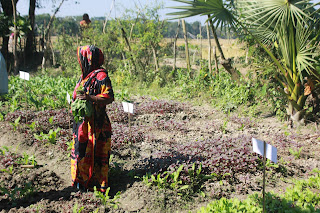
The Nexus between Poverty and Climate Change

Image
Poverty is a dynamic and multidimensional condition. It is formed by the interaction of social, economic, political, and environmental processes, individual and community characteristics, and historical circumstances (Leichenko and Silva, 2018). The characteristics of the poor or being poor vary within the country and between countries. It is increasingly recognised that, along with other drivers of poverty, climate change poses a serious threat to poverty reduction efforts. Climate change threatens to frustrate the accomplishments of development efforts that are achieved over decades. It also prolongs the already existing poverty cycles, increases inequalities, deepens food insecurity, and delays the poverty reduction process and sustainable development. As we already know, poor people’s livelihoods are highly dependent on climate-sensitive sectors and they lack the basic infrastructure for dwelling or for services at a community level. In addition, many of them live in areas hig...

Poverty in Bangladesh: Where to focus and how? [Newspaper Article]

Image
This year’s Nobel Prize for Economics has gone to Abhijit Banerjee and Esther Duflo, both MIT professors, and Professor Michael Kremer of Harvard University, for their “experimental approach to alleviating global poverty”. Parts of their work focused on some poverty reduction programmes in Bangladesh. Coincidentally, the Royal Swedish Academy of Sciences announced the award on October 14, three days before the world marks the International Day for the Eradication of Poverty on October 17. With the UN deadline for achieving the Sustainable Development Goals only 11 years away, what is the poverty scenario in Bangladesh? Higher growth often accelerates the process of poverty reduction. Riding on its steady economic growth, especially since the 1990s, Bangladesh has fought poverty hard and well, bringing down the poverty level from 59 percent in 1991 to 25 percent in 2016, according to the data of Bangladesh Bureau of Statistics (BBS). During the same period, extreme poverty fell to...